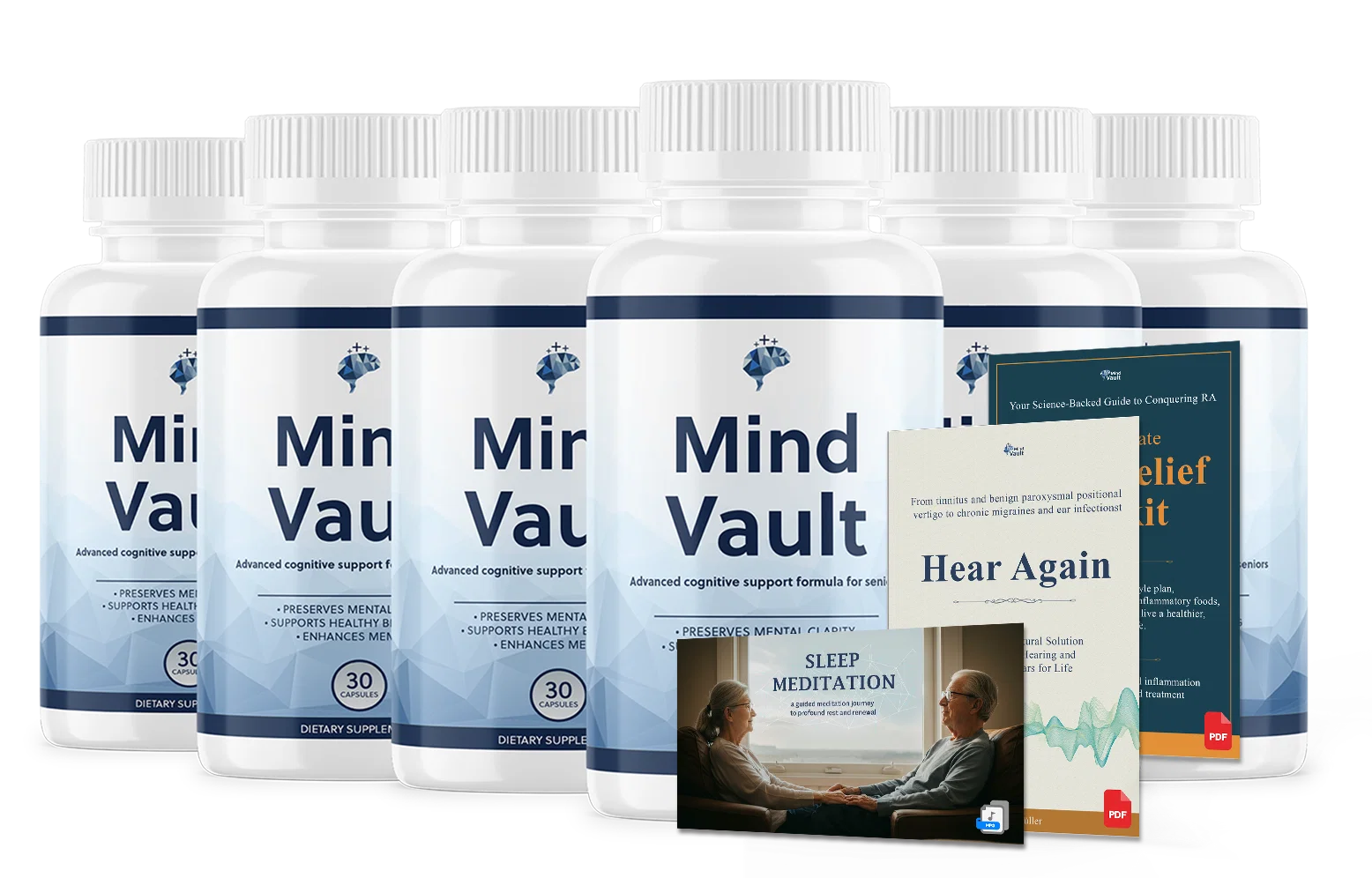
The Mind Vault ingredients list contains exactly ten components selected to support several parts of normal cognitive performance. The formula is not limited to a single memory herb or a simple caffeine boost. It combines vitamins, amino acids, a calming neurotransmitter, a familiar stimulant, botanical compounds, a phospholipid, and choline-related support.
The ten ingredients are niacin, vitamin B6, GABA, L-tyrosine, caffeine, Bacopa monnieri, phosphatidylserine, Alpha GPC, L-theanine, and huperzine. Together, they are positioned to support memory formation and recall, attention, mental clarity, healthy circulation, neurotransmitter activity, and brain-cell communication.
The Formula at a Glance
Mind Vault can be understood in four groups. Niacin and vitamin B6 provide basic nutritional support. Caffeine, L-tyrosine, L-theanine, and GABA shape alertness and calm focus. Bacopa monnieri and phosphatidylserine support memory and healthy neural structure. Alpha GPC and huperzine focus on acetylcholine, a chemical messenger involved in learning and recall.
That grouping does not mean each ingredient works in isolation. The formula's logic comes from overlap. For example, alertness is more useful when it remains calm enough to direct, and memory signaling depends on healthy cells and adequate nutritional support.
1. Niacin (Vitamin B3)
Niacin helps convert carbohydrates, fats, and proteins into energy the body can use. It also supports normal circulation, which matters because brain cells require a steady supply of oxygen and nutrients. In Mind Vault, niacin serves as part of the nutritional base rather than acting as the headline memory ingredient.
2. Vitamin B6
Vitamin B6 is involved in amino-acid metabolism and the production of neurotransmitters. Those messengers contribute to mood, attention, and normal nervous-system communication. B6 also supports energy metabolism, giving it a foundational role in a formula designed for everyday mental performance.
3. GABA
GABA, or gamma-aminobutyric acid, is associated with calming signals in the nervous system. Mind Vault includes it to balance ingredients tied to alertness and mental drive. This matters because productive focus is not simply being more stimulated; it also involves filtering distraction and maintaining a steady state.
4. L-Tyrosine
L-tyrosine is an amino acid the body uses to produce dopamine and norepinephrine. These neurotransmitters are involved in motivation, alertness, and cognitive response during demanding situations. It may be particularly relevant when mental fatigue makes it harder to begin or sustain a task.
The ingredient supports the formula's focus side, while niacin and B6 provide nutritional context and L-theanine adds balance. It should not be confused with a guaranteed performance enhancer, and people with medication or thyroid-related concerns should seek professional advice before use.
5. Caffeine
Caffeine supports wakefulness and attention by reducing the effect of fatigue-related signaling. It may help users feel more ready to read, plan, or complete tasks, but it also creates one of the formula's clearest suitability questions. Mind Vault is not caffeine-free.
People sensitive to caffeine should consider coffee, tea, chocolate, energy products, and medications that add to daily intake. Morning use is sensible, and anyone who experiences sleep disruption, restlessness, or unwanted effects should stop and seek qualified guidance.
6. Bacopa Monnieri
Bacopa monnieri is a botanical with a long history in traditional wellness practices and a modern place in cognitive-support formulas. It is associated with memory formation, retention, and recall, particularly when used consistently rather than as a one-time stimulant.
Within Mind Vault, Bacopa provides a memory-oriented counterpoint to caffeine and L-tyrosine. It works conceptually alongside phosphatidylserine, Alpha GPC, and huperzine to address how information is formed, communicated, and retrieved.
7. Phosphatidylserine
Phosphatidylserine is a phospholipid present in cell membranes, including the membranes of brain cells. Healthy membrane structure supports communication between neurons, making this ingredient relevant to normal memory, learning, and cognitive performance.
Its role is structural rather than immediately stimulating. That makes phosphatidylserine a useful part of a formula intended to support cognitive health over time. It complements Bacopa's memory emphasis and the acetylcholine pathway addressed by Alpha GPC and huperzine.
8. Alpha GPC
Alpha GPC is a choline-containing compound. Choline can be used to produce acetylcholine, a neurotransmitter closely connected with memory formation, learning, and mental processing. This gives Alpha GPC a direct place in the formula's memory-signaling strategy.
Because acetylcholine-related ingredients can matter when medications are involved, users should not treat Alpha GPC as an ordinary food ingredient. A healthcare professional can help assess the full formula in the context of prescriptions and personal health needs.
9. L-Theanine
L-theanine is an amino acid associated with tea and calm attention. It is often paired with caffeine because the two ingredients represent different sides of focus: alertness and composure. In Mind Vault, L-theanine helps make the formula broader than a simple stimulant capsule.
The goal is not sedation. It is support for a mental state in which attention feels steady enough to use. GABA reinforces that balanced positioning, while L-tyrosine and caffeine support readiness and drive.
10. Huperzine
Huperzine is included for its relationship with acetylcholine. It helps slow the activity of acetylcholinesterase, the enzyme that breaks acetylcholine down. This can support the continued availability of a neurotransmitter used in learning and memory.
Huperzine's role complements Alpha GPC, which supplies choline for acetylcholine production. That pairing is one of the formula's clearest mechanisms, but it is also a reason medication users should discuss the supplement with a qualified professional.
How the Ten Ingredients Work Together
Mind Vault's advanced brain formula uses layers rather than a single pathway. Vitamins support normal metabolism. Amino acids and caffeine address alertness and task engagement. Calming ingredients help balance that activation. Memory compounds support healthy cells and acetylcholine signaling.
This design may be useful to adults whose goals overlap. Someone may want to stay with a conversation, recall a name, and feel less mentally scattered in the same morning. A blend can address those related abilities more broadly than a single-ingredient product, although it can also make sensitivity and interaction checks more important.
Ingredient Safety Questions
Mind Vault is a dietary supplement, not a medicine. The presence of natural or familiar ingredients does not mean the formula suits every person. Caffeine sensitivity is an obvious consideration. Huperzine, Alpha GPC, L-tyrosine, vitamins, and botanicals can also matter in the context of medications and health conditions.
Adults who are pregnant, nursing, taking medicines, or managing a condition should seek professional advice before use. Stop taking the product and seek guidance if an unwanted reaction occurs. Serious or worsening memory concerns deserve medical evaluation rather than self-treatment.
Final Ingredient Assessment
The Mind Vault ingredients list is coherent and easy to understand when divided by function. The ten components cover foundational nutrition, alertness, calm focus, memory support, neural structure, and acetylcholine availability. Caffeine makes the formula unsuitable for some buyers, while huperzine and Alpha GPC raise sensible medication questions.
For a buyer comparing cognitive supplements, the formula's value is its breadth and one-capsule convenience. Read every ingredient, consider total caffeine intake, and decide whether a multi-pathway blend matches your goals better than a simpler product.